

Our Next 10 Years
Every great story has a moment when the main character looks back—not to live there, but to remember what has happened. Ten years ago, none of this looked impressive. There was no master plan, no clear roadmap, no guarantee it would work. There was simply a quiet but persistent question stirring in the soul: What is God doing—and where is He leading us?
That question has followed us everywhere—from a prayer walk in January 2014 wondering why we would leave beautiful Vancouver, British Columbia for a living room in Fresno’s Jackson neighborhood; from gathering on Sundays in our neighborhood cafeteria with no air conditioning, to a global pandemic that shut doors and forced us outside; to backyards, and once again—living rooms. Then came multiplication: another gathering, another circle of neighbors, another house. Different rooms but now a growing family of simple churches. Now, ten years in, the question presses harder than ever—What is God doing—and where is He leading us?.
The apostle Paul knew this moment well. Late in life, he looked back and wrote: “I thank Christ Jesus our Lord, who has given me strength, that he has considered me trustworthy, appointing me to his service” (1 Timothy 1:12). Paul never forgot who he had been—driven by control, certain he was right, blind to the harm he was causing. And then Jesus intervened—decisively. Paul was rescued, reclaimed, and redirected.
That is our story too. Over the past decade, we have watched Jesus do what only He can do—rescue neighbors. Lives pulled out of darkness. Over 150 neighbors expressing faith in Christ. Quiet moments that never made Fresno’s headlines but changed everything for our residents in Jackson. But rescue is only the beginning of our story.
Paul does not just remember his rescue—he names his allegiance: “Christ Jesus our Lord.” Lord. Not helper. Not consultant. King. As we look toward the next decade, we sense the Holy Spirit pressing on this word—not with condemnation, but with invitation. Will you let Jesus lead Neighborhood Church more fully? Will you stop negotiating and start following?
This is not about doing more religious activity; it is about formation. Learning to hear Jesus. Learning to discern His voice together. Learning to follow Him in real time—in our marriages, our work, our homes, our neighborhood. This is not program expansion; this is deeper soul work for the people of Neighborhood Church.
In this next season, we believe God is calling us to deeper holiness. It’s time to heal the trauma and start obeying Jesus’ words.
Paul also writes, “He has given me strength… and considered me trustworthy.” God entrusts weight only to those who are willing to carry it. If the future holds more responsibility—more neighbors, more simple church gatherings, more impact in Jackson—then the present must be a season of strengthening.
It happens in marriages choosing to fight for one another; in men telling the truth about their lives; in women reclaiming their God-given strength and voice; in healing that requires courage instead of denial. Strong families form the backbone of a strong church. Strong men and women form the backbone of a renewed neighborhood. Strength does not come accidentally—it comes through intentional formation: Scripture, prayer, spiritual direction, honest community.
In this next season, we are going to focus on strengthening what matters most - marriages and growing as Godly men and women.
Paul ends by saying he is '“appointed to serve.” He does not say he was strengthened so life would get easier.
We need to name this plainly: we love our simple church gatherings. They are AMAZING. Everyone loves them. They have become so comfortable and we have grown so much. We are clear that we are not trying to grow our 2 gatherings larger. What we are becoming is something far more demanding—and far more alive.
We believe in this next season Jesus is asking us to become a larger networked family of simple church gatherings—small, relational, intentional, and connected by shared values and shared mission: Jesus, People, Place. Imagine this: not one or two gatherings trying to carry the full weight of the mission, but something like seven—one on Monday, one on Tuesday, one on Wednesday, all the way through the week. Living rooms filled with prayer. Dinner tables opened in Jesus’ name. Neighbors becoming family. Scripture opened, lives shared, burdens carried. Different rooms. Same Lord. Same calling. This is not fragmentation; this is multiplication. We are “appointed to serve”…so we don’t live for our own comfort.
Let’s be honest: this path costs more. Smaller gatherings mean higher expectations of participation, less anonymity, more responsibility, and fewer spectators. In simple church, you can’t hide. Everyone brings something. Everyone serves. Everyone grows. This is not consumer Christianity; this is apprenticeship.
And it is exactly how the early church lived: “They devoted themselves to the apostles’ teaching and to fellowship, to the breaking of bread and to prayer… They broke bread in their homes and ate together with glad and sincere hearts… And the Lord added to their number daily those who were being saved.” Homes were the strategy. Formation was the priority. Multiplication was the result.
We are building a large family - not at 1 or 2 sites, but at dozens of smaller ones. A networked family that chooses to stay connected by our shared theology, shared practices, and shared rhythms of prayer, communion, and mission to Jackson—but it releases leaders, trusts the Holy Spirit, and allows the church to grow without losing its soul. Not centralized control, but shared submission to Jesus. This is how we stay strong and trustworthy as we multiply.
This vision does not advance without you. Multiplication does not happen because of a plan; it happens because ordinary people say yes to spiritual responsibility. Some of you will open your homes. Some of you will help lead gatherings. Some of you will disciple others. Some of you will anchor new communities through prayer, hospitality, and presence. Jesus is not asking, “Are you impressive?” He is asking, “Are you willing?”
So where is God leading us? Into deeper holliness to Jesus as Lord. Into strengthening marriages, and men and women that can be trusted. Into service that takes shape in more living rooms. Rescued. Strengthened. Entrusted. Sent. Not for comfort. Not for applause. But for love. Ten years from now, the win will not be a full room. The win will be many rooms, across the neighborhood, across the week—each one carrying the same quiet fire. Different rooms. Same Lord. Same mission. Same church.
And so the question remains - that same old question:
What is God doing—and where is He leading you?
Church as a Way of Life: 10 Years in, 10 Years ahead.
What Is Church—for the Next Ten Years?
When people talk about church, they usually mean a place you attend. They talk about how many people attend, how good the preaching and music are, or how much numerical growth has happened in recent years. Those categories are familiar—but they don’t actually answer the deeper question.
What is church?
And just as importantly:
What should church look like as we move into the next decade?
For us at Neighborhood Church, that question has never been theoretical. It has been shaped by the Jackson Neighborhood, by our neighbors, and by ten years of lived obedience.
A Church Rooted in Responsibility
Neighborhood Church was planted in the Jackson neighborhood of Fresno—8 blocks by 12 blocks, 923 homes. From the beginning, we sensed God calling us to something specific and demanding: to see our neighborhood as a geographical area of spiritual responsibility.
That language mattered.
We weren’t asking how much we could accomplish across Fresno.
We were asking how deeply we could commit.
Instead of imagining church as something people travel to, we began to imagine church as something embedded—present, accountable, and shared with the people who live here. If there were economic challenges, they were our challenges. If there were relational fractures, they were ours to carry. If there were systemic injustices or spiritual wounds, we did not treat them as someone else’s problem.
We believed God was inviting us to live incarnationally—to take seriously the idea that the body of Christ is meant to dwell among people, not hover above them.
So we asked a question that continues to guide us:
What would it look like if God got His way in Jackson?
Not everywhere.
Not someday.
But here and now.
Rediscovering the Church We See in Acts
As we lived into that question, we found ourselves returning again and again to the New Testament—especially the book of Acts. Not as a blueprint to replicate mechanically, but as a vision to be formed by.
What we saw in scripture was not a church organized around events, but a family organized around loving each other.
They gathered in homes.
They devoted themselves to prayer and Scripture.
They broke bread regularly.
They confessed sin.
They shared resources.
They made disciples.
Over time, we realized that church, at its core, is not a weekly event—it is a way of life practiced together in a family.
That conviction reshaped everything.
Church as a Practiced Way of Life
Our gatherings are intentionally simple because simplicity allows us to focus on what actually forms us.
Every week, we practice confession and repentance—not because we are obsessed with failure, but because we believe freedom comes through truth.
Every week, we take communion—not as a ritual to check off, but as a repeated act of gratitude and dependence on Christ’s mercy.
Every week, we worship Jesus—not just with songs, but with attention, obedience, and surrender.
These practices are not supporting elements. They are the center.
We don’t gather to consume spiritual content.
We gather to practice the way of Jesus together.
Church That Feels Like Family
As these practices took root, something else became clear: church is meant to function more like a family than an organization.
Jesus did not describe His followers as an audience. He called them brothers and sisters. He said the world would recognize His disciples by their love for one another. And He prayed that His people would be one.
We’ve taken those words seriously.
That’s why our gatherings are intentionally small—typically 10 to 50 people in a home. We’ve learned that beyond a certain size, it becomes difficult to truly know one another, carry real burdens, and grow in shared responsibility.
This also shapes how we think about children. Kids are not a distraction from church; they are part of the body. Sometimes they participate fully. Sometimes they’re cared for intentionally. Often, discipleship happens throughout the week as families and neighbors share life together.
It’s not efficient.
But it’s faithful.
Every Disciple a Participant in the Mission
In this kind of church, there is no sharp divide between leaders and everyone else.
We believe every follower of Jesus has been given gifts by the Holy Spirit for the sake of the community. Discipleship, therefore, is not passive. Everyone is being formed—and everyone is learning to help form others.
This is why we pray regularly for the stirring of spiritual gifts. It’s why we emphasize participation over performance. And it’s why we see ourselves as a missionary people.
Some of us are donor-supported missionaries. Others work full-time jobs. But all of us are sent.
The primary way we live out that calling is simple and demanding:
We love our neighbors.
Not abstractly.
Not occasionally.
But as a way of life.
A Church That Multiplies by Being Faithful
As we look toward the next ten years, our aim is not to grow one gathering bigger—it’s to grow many smaller gatherings through multiplication.
We want to see more simple, gospel-centered communities take shape in homes. More gatherings in living rooms and around tables. More shared life. More people discovering they don’t need permission to host the body of Christ.
Again and again, we’ve seen that new gatherings begin with hospitality and a heart for worship. Someone opens their home. People show up. The Holy Spirit is present as Jesus meets them there.
That’s how our church grows—not by centralizing, but by reproducing faithful presence.
Formation Through Spiritual Direction
As our community has matured, we’ve also recognized the need for deeper formation. Weekly teaching alone is not enough. People need help paying attention to where God is already at work in their lives.
That’s why spiritual direction has become a central commitment for us moving forward.
Spiritual direction is about listening—together—for God’s voice through Scripture, prayer, and lived experience. We want every person in our community to be under spiritual direction and, over time, to be equipped to offer that same attentive presence to others.
This is how we learn to discern—not just what to do, but how God is forming us.
Strengthening Marriages, Strengthening the Church
We’re also naming something clearly: broken families have deeply shaped both our culture and our neighborhood.
Rather than responding with judgment or idealism, we’re committing ourselves to formation—especially among married couples. In the years ahead, we want to invest deeply in helping marriages become places of healing, faithfulness, and sacrificial love.
Not perfect families.
Faithful ones.
Because when marriages are strengthened, families and communities are strengthened.
Offering What We’ve Been Given
After ten years, we’ve come to see that our experience is not just for us.
We are increasingly invited to help other pastors, leaders, and planters rethink church—what it is, how it’s practiced, and how it’s rooted in place. We want to respond to those invitations with humility and hospitality, offering training, immersion experiences, and shared learning for those who want to walk this path.
Not to replicate us.
But to reimagine church faithfully.
Where This Journey Is Taking Us
We are not trying to be impressive.
We are trying to be faithful.
A church rooted in a real place.
A church shaped by shared practices.
A church that forms people over time.
8 blocks by 12 blocks was where this journey began. And as we move into the next decade, the question that continues to guide us is this:
What would it look like if God got His way among us?
I think we have part of that answer: We are a family of simple churches pursuing a Jesus + People + Place vision of the Church as we gather in homes and continue to multiply.
A Jesus Movement: A Decade of God’s Transforming Work in the Jackson Neighborhood
A Jesus Movement: A Decade of God’s Transforming Work in the Jackson Neighborhood
When we look back over the last decade in the Jackson Neighborhood, what stands out most isn’t how much we’ve done—it’s how much we’ve had to learn.
We didn’t move into Jackson with an exact blueprint for transformation or a packaged model of ministry. We came with a calling to follow Jesus faithfully in a specific place, trusting that if we stayed long enough, listened deeply enough, and obeyed the Holy Spirit, God would renew what only He can. What has unfolded since then has been slower, messier, and far more beautiful than anything we could have planned.
This is not a story of rapid church growth or clean outcomes. It’s a story of incarnation—of God choosing to work through proximity, patience, prayer, and ordinary people learning to say yes, again and again. It’s the story of how Neighborhood Church has become not just a weekly gathering, but a collaborative ecosystem for neighborhood renewal, rooted in the simple conviction that Jesus cares deeply about people and places—and that His renewal work touches every part of life.
A Call to Place: Learning to Stay (2015–2016)
In 2015, we came as missionaries to the Jackson Neighborhood of Fresno, California. Jackson is an eight-by-twelve block neighborhood—923 homes—one of the most under-resourced areas in the city and often described through statistics: poverty rates, graduation gaps, income levels, and crime data.
But we quickly learned that if we led with solutions we would miss the people those solutions aimed to serve.
Our calling wasn’t to fix Jackson. It was to become people who truly loved our neighbors. To love the people right in front of us—not as a project, but as family-in-the-making. Jesus’ words in Luke 10 shaped us deeply. The Good Samaritan didn’t solve racial injustice in a day, but he crossed the road, moved toward suffering, and stayed present.
So we stayed.
Practically, those first months and years were marked by a slow, deliberate posture. We prayer-walked the same streets week after week. We knocked on doors without an agenda. We sat on porches and around kitchen tables listening to stories. We learned names, family histories, and where people had been hurt—often by institutions that promised help but failed to follow through.
Jeremiah 29:7 became an anchor for us:
“Seek the peace and prosperity of the city to which I have carried you… because if it prospers, you too will prosper.”
That verse reshaped our imagination. God wasn’t calling us to extract people out of a broken neighborhood—He was inviting us to seek shared flourishing (shalom). That first year was quiet. Trust came slowly. There were many moments when we wondered if anything visible was happening at all. But Jesus was forming something deeper in us: the conviction that faithfulness in neighboring precedes fruit.
From Listening to Shared Action (2016–2018)
As trust deepened, neighbors began inviting us into their real lives—not just their needs, but their ideas, frustrations, and hopes for the neighborhood. We started having intentional one-on-one listening conversations, asking simple but powerful questions: What do you love about Jackson? What feels broken? What have people tried before?
One moment in particular changed the trajectory of our work.
After a child was seriously injured along Tulare Avenue—a busy street with no sidewalks—grief and anger rippled through the neighborhood. Parents were tired of watching their kids walk to school in the road. Rather than stepping in as “leaders with answers,” we helped neighbors organize. Living rooms filled with residents. Hand-drawn maps identified danger zones. Stories were shared. City planners and council members were eventually invited into the conversation.
When the infrastructure plan was approved, something deeper than traffic safety had happened. Neighbors experienced collective agency. They realized their voices mattered.
Out of that moment, Jackson Community Development Corporation (Jackson CDC) was formally established in 2016. What began as an informal grassroots community development effort became a nonprofit platform for neighbors to shape the future of their own community—addressing safety, education, leadership development, and long-term well-being.
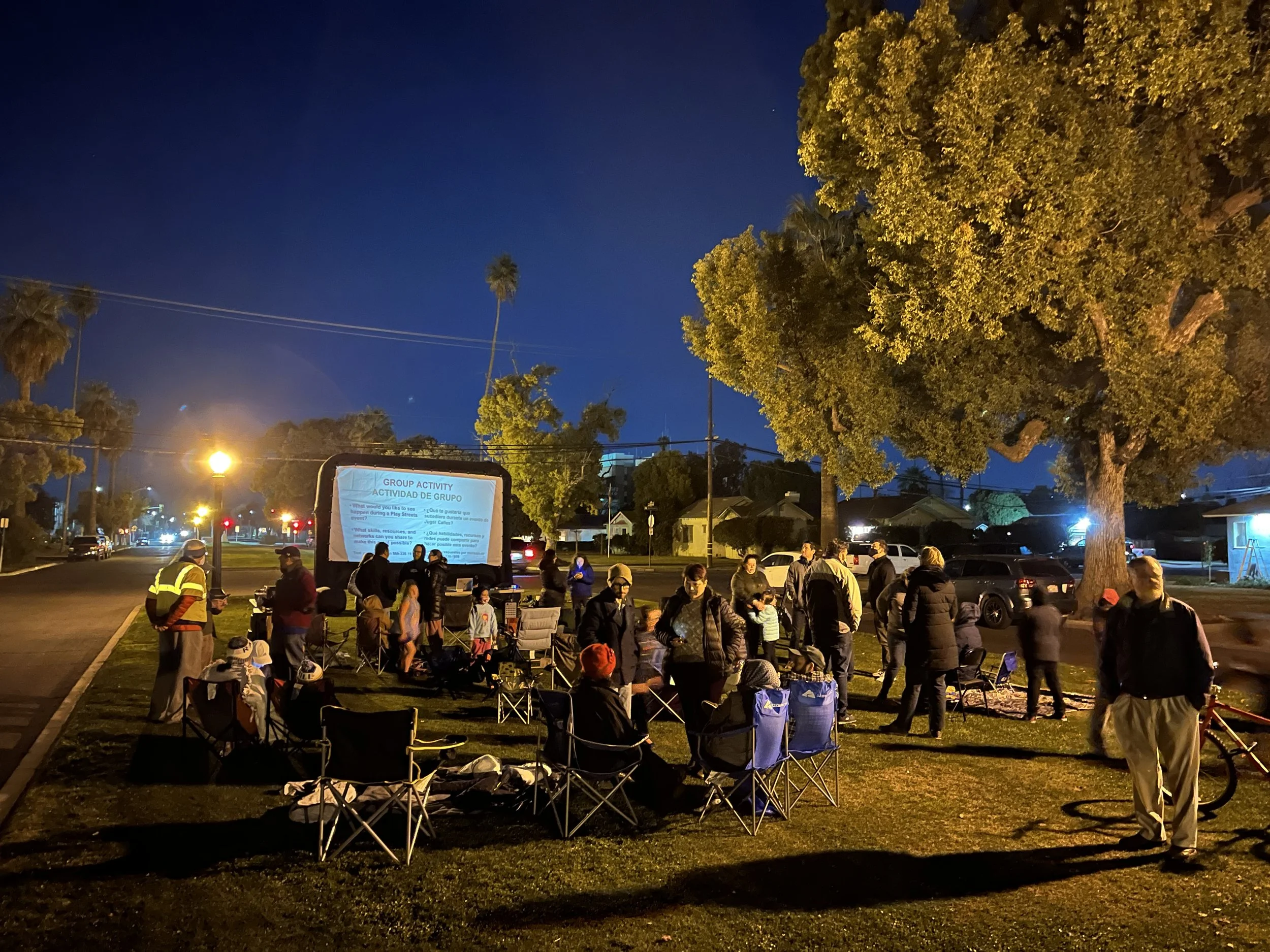
Around the same time, another expression of shared action took shape. We started gathering our neighbors at Jackson Elementary for a weekly worship gathering. We started seeing people accept Christ, be baptized and make disciples. It was amazing! We were also so encouraged by a handful of churches who became our cheerleaders and support - Mountain View,OnRamps and so many others. In fact our church’s first leadership team was 6 lead-pastors from across town! Around that same time we renovated a woodworking workshop and hired young men from the neighborhood—ages 16 to 24—many of whom carried gang affiliations, criminal records, or had problems in school. Together they built Little Free Libraries by hand, sold them to supporters, and personally installed them in front yards across Fresno.
This wasn’t job training alone. It was dignity. It was trust. It was Christ-centered mentoring alongside skill-building. Young men who had been written off were entrusted with tools, paid real wages, and sent into people’s neighborhoods as representatives of something good. That work continued faithfully until COVID forced us to pause it in 2020.
Micah 6:8 took on flesh for us in those years:
“What does the Lord require of you? To act justly and to love mercy and to walk humbly with your God.”
Justice, we learned, is rarely abstract. Sometimes it looks like sidewalks. Sometimes it looks like a paycheck. It always looks like salvation, but you have to stay long enough to see it.
The Church Takes Shape: A People, Not a Place (2016–2019)
Neighborhood Church officially began gathering in January 2016 in the cafeteria of Jackson Elementary School. The location mattered. We wanted the church to be unmistakably rooted in the neighborhood—not set apart from it.
Those early gatherings were simple and relational. Scripture was read. Songs were sung—often led by whoever was brave enough. Teaching connected the Bible to everyday life in Jackson as neighbors sat around tables in the gathering. Prayer was open and honest. Shared meals anchored everything.
As our gathering grew, First Armenian Presbyterian Church generously offered us space to gather in 2019 so we could have air conditioning and clean play space for the kids to enjoy. That move deepened our partnerships with other congregations in Fresno and reminded us that the Church is always bigger than one expression.
During these same years, rhythms began to emerge that would become anchors in the life of the neighborhood.
Every September, our church launched Adopt-A-Gator, inviting neighbors to pray intentionally for a specific staff member at Jackson Elementary. We adopted teachers, custodians, office workers, administrators and after school staff —praying for them by name, delivering encouragement, and showing up consistently in a system that often leaves educators unseen.
At Christmas, neighbors decorated cars and drove through the streets in a Christmas parade, while families stood outside cheering—many encountering the church not as an institution, but as a celebration of hope.
Easter became more than a Sunday. On Good Friday, we created an outdoor Stations of the Cross along Huntington Boulevard—handmade art, Scripture, and a bilingual liturgy inviting neighbors to walk with Jesus toward the cross. On Saturday, the neighborhood gathered for a massive Easter party—food, games, joy, and gospel witness. On Sunday, we gathered neighbors outdoors to proclaim, “Christ is risen.”
These weren’t events we hosted for the neighborhood. They became rhythms we shared—markers of renewal in a place often overlooked.
Jesus’ words guided us deeply in those years:
“Behold, I make all things new.”
Crisis, Adaptation, and a Shift Toward Ecosystem (2020–2021)
When COVID hit, everything changed overnight.
Jackson was hit hard. Many neighbors were essential workers without safety nets. Undocumented families received no government relief. Food insecurity surged. Fear and isolation settled in.
So we pivoted—not because we had a strategic plan, but because love demanded it.
We accelerated our work, becoming a critical lifeline. Emergency relief funds helped families with rent and utilities. Weekly food distributions served dozens of households. A volunteer-run neighborhood helpline responded to urgent needs. School supplies were delivered directly to students’ homes. Wilderness trips offered healing space for families after months of confinement.
At the same time, Neighborhood Church moved online, then returned to in-person outdoor gatherings. Eventually, we found ourselves meeting in living rooms.
That shift changed us.
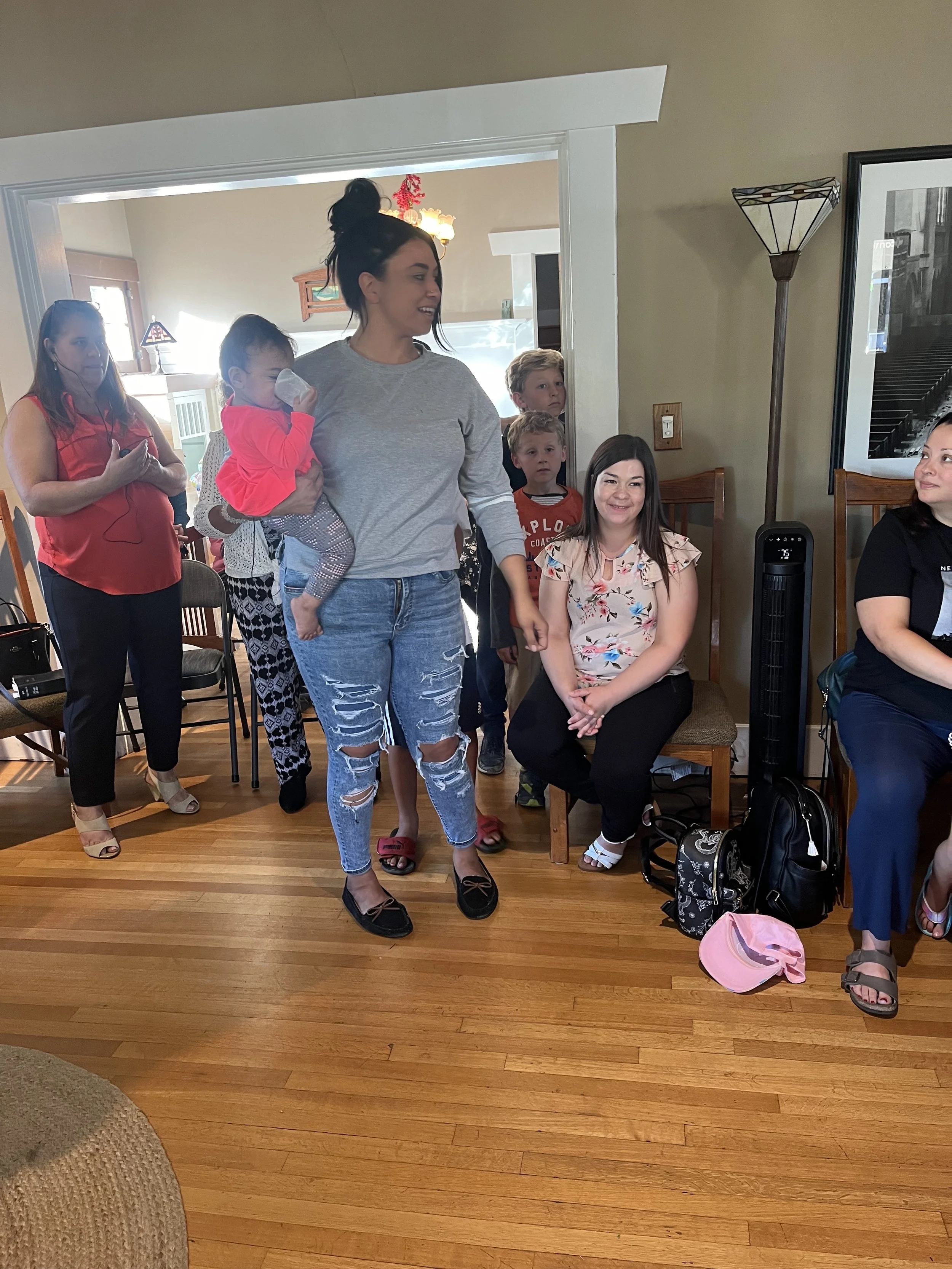
Meeting in homes stripped away performance and replaced it with vulnerability. Worship felt closer. Prayer became more participatory. Creating space for people in the spirit of hospitality became sacred. We began to realize that what had emerged out of necessity was actually a gift.
Acts 2:46–47 came alive:
“They broke bread in their homes… and the Lord added to their number daily those who were being saved.”
COVID clarified something we had been sensing for years: Neighborhood Church was never meant to be just a weekly gathering. It was becoming an ecosystem—House church gatherings, nonprofit work, social enterprises, and community partnerships all interwoven in service of people and place, for the sake of the gospel.
Re-centering on Formation and Local Leadership (2021–2023)
After years of intensity and the strain of the pandemic, we sensed God inviting us to pause. With the blessing of our Leadership team, we entered a sabbatical—a season of rest, prayer, and reorientation.
When we returned, clarity emerged.
Rather than rebuilding everything as it was, we leaned into what the Holy Spirit seemed to be forming beneath the surface: deeper discipleship through one-on-one and group spiritual formation, prayer and worship as the engine of mission, and leadership rising from within the neighborhood itself.
We began meeting consistently in living rooms, marking the beginning of what would become a micro-church network—smaller, relational expressions of church embedded across the neighborhood. Instead of building one thing bigger, we decided to grow bigger by multiplying smaller things across our neighborhood.
At the same time, Jackson CDC continued to mature. After COVID, Sarah Valentine, a Jackson neighbor already involved in our Saturday Sports program, stepped into leadership. A few years later, in 2023, Rhonda Dueck, another deeply rooted neighbor, became Executive Director.
Under her leadership, Jackson CDC has flourished. Programs expanded. Systems strengthened. Resident leadership deepened. What began as a small nonprofit responding to immediate needs grew into a robust, neighbor-led organization multiplying the work far beyond what we could have done alone.
John 15:5 anchored us during this season:
“Apart from me you can do nothing.”
We were reminded that fruitfulness flows from abiding.
Integration, Continuity, and New Expressions (2023–2025)
In recent years, old seeds have borne new fruit.
The vocational thread that once ran through the woodworking shop re-emerged through neighbors launching a new woodworking shop and a newly renovated mechanics pit, where kids are now learning woodworking and automotive skills alongside Christian mentoring. Hardwood and hearts are being formed. Wrenches and prayer sit side by side. Different tools, same theology—dignity, discipleship, and belonging.
Love of neighbors deepened across the ecosystem. Jackson CDC expanded mentoring to dozens of kids weekly. Residents trained as Community Conductors stepped into leadership. Neighborhood Church gatherings remained relational and prayer-centered. We multiplied a house church, focused on providing spiritual direction to our neighbors and deepened our partnerships with Jackson Elementary, local churches, nonprofits, and civic leaders for Kingdom renewal.
Prayer remained central—prayer walks through streets and schools, worship woven into gatherings, leadership meetings grounded in listening prayer.
Isaiah 58:12 often comes to mind:
“You will be called Repairer of Broken Walls, Restorer of Streets with Dwellings.”
Even amid personal trials in these years—health challenges, family crises, exhaustion, seemingly endless spiritual attacks—God met us. He refined our dependence and expanded our compassion.
What This Decade Has Taught Us
Looking back, a few convictions remain steady:
God works slowly—and deeply.
Proximity changes everything.
Listening precedes leadership.
Spiritual formation sustains what programs cannot.
This has always been God’s work.
Philippians 1:6 continues to anchor us:
“He who began a good work among you will carry it on to completion.”
An Ongoing Invitation
We don’t see this decade as a finish line. It feels like a foundation.
Neighborhood Church has become a collaborative ecosystem for neighborhood renewal—weekly gatherings, a nonprofit, social enterprises, community partnerships, and friendships all working together to live out our shared values of Jesus + People + Place across 8 blocks, 12 blocks, and 923 homes.
God is still at work in the Jackson Neighborhood. There is more healing to come, more leaders to be raised up, more salvation stories yet to be told.
To our church family—thank you for walking this road with us.
To our partners—thank you for trusting this slow, relational work.
To those just discovering our story—you are welcome here.
We remain committed—to Jesus, to one another, and to this place—trusting that the same God who began this work will carry it forward.
With gratitude,
Joe & Heidi White
Simple Church - Jesus + People + Place
Check out what Neighboring looks like in Jackson - YOUTUBE
When we first started talking about loving our neighbors, it sounded simple—almost too simple.
What if God has strategically placed you exactly where you live—not by accident, not because of the housing market, not because of your job—but for the purpose of loving the people who live around you?
Not loving people in general.
Not loving humanity.
But loving your actual neighbors.
The ones across the street.
The ones next door.
The ones behind you.
For a long time, that idea felt idealistic—even naïve. But over the last decade, it has become the center of how we express following Jesus. And we’ll be honest: it’s hard.
A City with Two Tracks
To understand why loving your neighbors is difficult, you have to understand the place we live.
In the early 1900s, Fresno was still becoming a city. The Jackson neighborhood began as farmland—alfalfa fields, to be exact—until a streetcar line routed through the area and transformed it into one of the most desirable neighborhoods in town. Huntington Boulevard became known for its beauty: wide medians, tree-lined streets, and grand homes alongside modest bungalows. Teachers, business owners, and civic leaders moved in.
But another story was unfolding alongside the beauty.
Like many American neighborhoods, Jackson was shaped by racial covenants, redlining, and exclusionary zoning. These policies legally kept people of color out for decades. During World War II, Japanese internment camps were built right at the edge of the neighborhood.
Progress and injustice ran side by side—
like two rails of the streetcar tracks that once ran down Huntington Boulevard.
Those two rails still exist—not just in Jackson, but across Fresno. This is a city full of life and pain, diversity and division, creativity and neglect. Fresno spans 112 square miles and is made up of 92 neighborhoods. It is one of the most diverse cities in the country—and one of the most underserved.
So the question becomes unavoidable:
What is God’s heart for a place like this? And where do we fit in?
Jesus, People, and Place
When we started Neighborhood Church, we didn’t begin with a church model. We began with Jesus.
Jesus didn’t float above the world offering ideas. He entered it. He took on flesh. He moved into a neighborhood. He walked streets, shared meals, healed bodies, confronted injustice, and announced that the kingdom of God had come near.
Jesus teaches us to pray, “Your kingdom come, your will be done, on earth as it is in heaven.” That’s not abstract language—it’s place-based language. Heaven invading earth. God renovating real people in real places.
As we returned to Scripture, a pattern kept emerging:
God creates the world good.
Sin fractures people and places.
God does not abandon what’s broken—He comes to it.
And then He empowers His people with the Holy Spirit and sends them back into the world as agents of renewal.
In Jeremiah 29, God tells His people to seek the peace and prosperity of the city where they live—to plant gardens, build homes, raise families, and pray for the city’s good. In Luke 4, Jesus declares His mission to bring good news to the poor, freedom to the oppressed, and sight to the blind. In Nehemiah, a man weeps over a broken city and then gathers ordinary people to rebuild it.
This isn’t just spiritual renewal. It’s holistic renewal.
People and places matter to God.
So we began to talk about three values that wouldn’t let us go:
Jesus. People. Place.
Not as a slogan—but as a way of life.
The Crisis We Didn’t Expect
If we’re honest, the hardest part of the last ten years hasn’t been resistance from the outside. It’s been doubt from the inside.
We doubted whether what we were doing was effective.
Like most church leaders, we had been shaped by a particular scorecard:
How many people are showing up?
How many salvations this year?
Is the budget growing?
Are there more programs, more staff, more infrastructure than the year before?
And the truth is, in a small, neighborhood-based expression of church, those numbers don’t always look impressive. Sometimes they look discouraging.
There were years when three or four people came to faith—not dozens. Seasons when growth felt painfully slow. Moments when we looked around and wondered, Is this actually working?
What we eventually realized was this:
We were measuring the wrong thing.
We were measuring outputs when God was inviting us to measure inputs.
Not, “How big is it?”
But, “Are we being faithful?”
Not, “How visible are we?”
But, “Are we present?”
Not, “Is this impressive?”
But, “Is this obedient?”
That shift didn’t lower the bar.
It raised it.
When the Soil Feels Too Hard
There were deeper doubts too.
Moments when the brokenness around us felt overwhelming—neighbors’ lives tangled in addiction, trauma layered upon trauma, generational poverty that no program could fix.
More than once, we prayed, “Unless the Lord brings Kingdom renewal, nothing will happen.”
And beneath that prayer was a quieter fear:
What if God doesn’t actually change neighbors and neighborhoods like this?
That fear exposed something in us—not a lack of belief in God’s existence, but a lack of trust in His power.
So we had to relearn trust. To believe again that transformation doesn’t come from our effort, intelligence, or strategies—but from God’s Spirit moving through ordinary people in ordinary places.
The Cost of following Jesus
There’s another part of this story that matters: it’s costly.
We moved from a comfortable, affluent neighborhood in Vancouver, British Columbia, into the Jackson neighborhood. Others moved here too. We bought homes. We committed to staying.
And staying means dealing with what’s real.
It means sometimes experiencing theft.
It means being confronted with neighbors battling addiction.
It means hearing domestic violence through thin walls.
It means confronting your own fear, prejudice, and desire for comfort.
Following Jesus in a place like this requires giving something up.
Comfort.
Upward mobility.
The illusion of control.
In many ways, it means trading the American Dream for a Kingdom dream.
Not because comfort is evil—but because Kingdom love is costly.
A Simpler, Deeper Way of Being the Church
Over time, as we watched neighbors meet Jesus, we began asking a simple question:
What is the most simple way to be the church and still be faithful to Scripture?
We landed on three essentials:
Worship of Jesus
Shared life together
A shared mission
Jesus. People. Place.
Instead of growing one thing larger, we chose to grow many smaller sized things. Homes instead of buildings. Meals instead of programs. Shared practices instead of polished events.
We’re not trying to be a small church. We’re trying to be a simple and diversified church—a network of gatherings rooted in neighborhoods, living the same values and sharing the same mission.
As we’ve grown, we’ve begun to imagine a future with dozens of gatherings scattered across neighborhoods—ordinary followers of Jesus loving their neighbors faithfully.
Loving Your Eight
So where does this leave you?
You don’t have to move.
You don’t have to fix your city.
You don’t have to solve systemic injustice by yourself.
You just have to love your neighbors.
Start with the eight closest to you:
Three across the street
Three behind you
One on your left
One on your right
Pray for them. Learn their names. Wake up each day and look for the moments God provides for you to be fully present.
Some of those moments will be beautiful.
Some will be painful.
All of them will matter.
“Wake up, sleeper,” Paul writes, “and Christ will shine on you… making the most of every opportunity, because the days are evil.”
God is providing opportunities to do the very thing He has already asked you to do:
“Love your neighbor as yourself. There is no commandment greater.”
(Mark 12:30–31)
From Consumer Church to Neighborhood Family
It all began here
The Story Behind Our Beginning - YOUTUBE Video HERE
When Heidi and I reflect on our own journey with church, we keep coming back to the same realization: Western Christianity has become very good at some things—and strangely ineffective at others.
We are really good at getting people into a building.
We are really good at generating excitement around an event.
We are even good at offering classes, programs, and services meant to help people grow.
But when we step back and look honestly at the landscape of the Western church, something still feels thin.
Despite full calendars and packed schedules, there is a growing sense of disillusionment. People are quietly walking away—not necessarily from Jesus, but from the way church has been practiced. And when we ask why, we have to be willing to consider a difficult possibility: maybe the models we’ve relied on aren’t producing the kind of disciples Jesus envisioned (Matthew 28:19–20).
If we keep doing what we’ve always done, we should expect to keep getting what we’ve always gotten.
For many churches, the basic formula hasn’t changed much. A weekly gathering. A small group during the week. A class or two throughout the year. And while those things aren’t bad, we began to wonder if we were expecting them to do more than they were ever designed to do.
Because when we read the New Testament—especially the book of Acts—we see something different.
We see ordinary people living with extraordinary courage.
We see miracles and signs that are unmistakably the work of God, not hype.
We see deep devotion, radical generosity, and shared life (Acts 2:42–47).
And interestingly, it doesn’t all seem to hinge on a gathering. It hinges on the Holy Spirit moving through the people of God (Acts 1:8).
That contrast created an ache in us.
A deep, holy ache.
It was the ache of knowing we were busy with church, but not always seeing lives—or places—actually change.
We longed to see the body of Christ actually function like a body—to truly love one another, as Jesus prayed for His disciples (John 13:34–35; John 17:20–23). To be a community small enough to know each other, yet strong enough to carry one another’s burdens (Galatians 6:2).
We wanted to be a church where people shared resources, stepped up for one another, cared for the poor among them, and rallied around a shared mission (Acts 4:32–35; James 1:27).
We didn’t want to be a church centered on one day of the week.
We wanted to be a church that lived as the family of God all seven days.
Because the gospel is not just a story about what happens after we die.
Yes, sin fractured the world.
Yes, Jesus came to save sinners.
Yes, He died and rose again.
But the gospel doesn’t stop there.
Jesus also calls His disciples to go and make disciples. And then He makes a promise: I will be with you (Matthew 28:19–20).
That promise matters, because it tells us what kind of story we’re living in.
We are living in the middle of God’s renewal story.
Until Christ returns and fully restores all things, the Holy Spirit is actively pushing the people of God into spaces and places where renewal is needed. Renewal in people. Renewal in systems. Renewal in neighborhoods. Renewal that makes earth look a little more like heaven—just as Jesus taught us to pray.
And when we looked around at the place God had put us—the Jackson Neighborhood—we realized just how much renewal was needed.
Jackson—the place God planted us—faces real challenges.
There are gaps in infrastructure that limit human flourishing. A lack of park space. Blighted homes. Vacant lots. Disinvestment along the business corridor. Fewer opportunities than exist in other parts of the city.
There are educational challenges. Two-thirds of the students at Jackson Elementary do not read or do math at grade level. That reality represents long-term consequences for families and futures.
There are spiritual and relational wounds as well. The presence of a porn shop in the neighborhood is a visible reminder of how families are targeted and broken. We see the fruit of that brokenness everywhere: domestic violence, drug abuse, fractured homes, generational poverty.
So we had to ask ourselves an honest question:
Can consumer Christianity really form the kind of disciples who are equipped to address problems this complex?
Or does this moment require something deeper?
When we read Scripture, we see examples of God’s people stepping into places like this with both spiritual conviction and practical action. We think of Paul confronting the powers and principalities of a city so deeply that unjust systems were disrupted (Acts 19:23–27; Ephesians 6:12).
We think of Nehemiah, standing with Ezra—holding Scripture in one hand and a shovel in the other—calling people back to God while rebuilding a city (Nehemiah 2; Nehemiah 8).
And we began to wonder: could we be a church like that?
Not a church that simply exists in a neighborhood, but a church that takes responsibility for a neighborhood (Jeremiah 29:7). A church whose form and function are designed for the renewal of a place.
That question led us into a season of prayer, Scripture, and deep wrestling. What emerged wasn’t a strategic plan as much as a holy discontent—a refusal to settle for comfort over faithfulness.
Slowly, a vision began to take shape.
What if we were a church of neighbors who prioritized three things?
First, Jesus.
A hyper-focus on who He is, what He said, and what He did—and a commitment to actually model our lives after Him (Luke 9:23; John 14:15).
Second, people.
Not people in general, but our actual neighbors. The people who live next door. Across the street. Behind us. To our left and to our right (Luke 10:33–37; Mark 12:30–31).
Third, place.
What if God had a vision for Jackson itself? What if we truly believed that this neighborhood could prioritize what God says is vital? That under our watch, we could address systemic problems and human sin together?
If we were going to prioritize Jesus, people, and place, then we had to ask another hard question:
What kind of church form could realistically accomplish that?
The answer became increasingly clear. We needed to get out of the building and into the neighborhood (Acts 8:1–4).
Instead of centering church life around a single location, we decided that our primary gathering spaces would be our homes (Acts 2:46; Romans 16:5). Rather than one church growing larger and larger, we envisioned many small churches spreading throughout the neighborhood.
We didn’t want to leave a big church to start a small one.
We wanted to be a small church that could multiply over and over again (2 Timothy 2:2).
Because multiplication changes everything.
If we could multiply, we could make disciples across the entire neighborhood. The gospel could impact every corner through the neighbors who already lived here.
Over time, we began to see that this wasn’t just about church growth. It was about creating a collaborative ecosystem for gospel saturation. So we began building structures—organizations and shared efforts—designed to keep Jesus and His Kingdom priorities at the center of neighborhood life (www.jacksoncdc.org)
What if the gospel could infiltrate every layer of neighborhood life—economic, political, spiritual, and relational? (Colossians 1:19–20).
What if Jackson could become a gospel-saturated neighborhood?
That has been our heart.
That has been the question driving us: could we become that kind of family?
For the last ten years, that has been our project mission—becoming the church, together, in a place, for the sake of renewal.
And the work is still unfolding.
Which raises a final question—not just for us, but for you:
Where might God be stirring a holy discontent in your own life?
And what might He be inviting you to imagine with Him?
Sometimes the beginning of renewal doesn’t start with answers.
It starts with an ache you refuse to ignore.